




Why E-mold Is a Reliable CNC Machining and Manufacturing Partner
How CNC Machining Works for Custom Parts and Prototypes
CNC machining is one of the most widely used methods for turning digital designs into physical parts with stable dimensions and repeatable quality. For buyers who need custom parts, prototype components, or short-run production, it provides a practical way to move from CAD files to usable hardware without waiting for mold tooling.
This article explains how the process works, why it performs well for precision parts, and what buyers should understand before choosing CNC machining for a project. It is especially useful for engineers, product developers, and purchasing teams that want to compare machining with other manufacturing routes.
What CNC Machining Actually Does
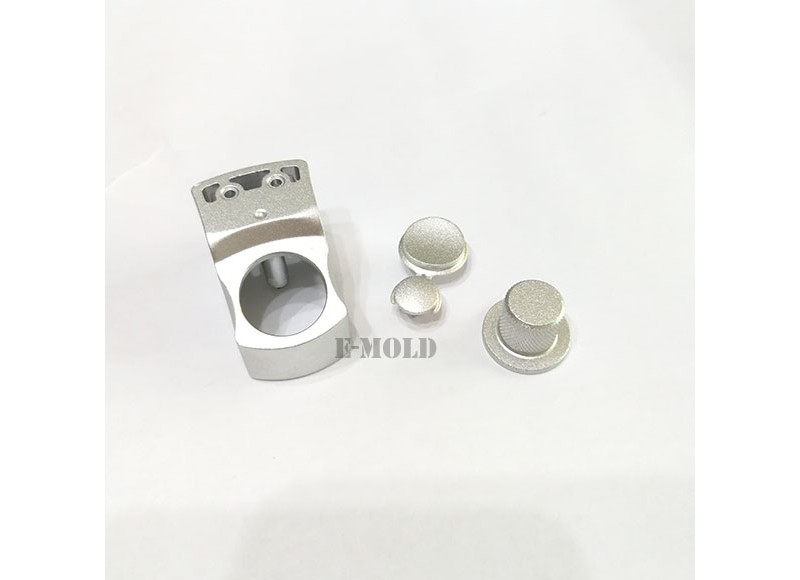
CNC machining is a subtractive manufacturing process. Instead of building a part layer by layer or forming it in a mold, the machine removes material from a solid block, blank, or bar stock using computer-controlled cutting tools. The machining program follows a toolpath generated from a digital model, which allows the machine to create features such as holes, pockets, faces, slots, and contour surfaces with high repeatability.
The process usually starts with a 2D drawing or 3D CAD file. The design is converted into a machining program that tells the machine how fast to move, where to cut, and which tools to use. Once the program is set, the machine repeats the same motion with a high level of consistency, which is why CNC machining is often used for precision work.
For buyers, the main value is control. The engineer can define dimensions, tolerances, and surface requirements in advance, then check whether the supplier can machine the part accurately and efficiently. That makes CNC machining suitable for projects where the part must fit, seal, rotate, mount, or assemble correctly in a larger system.
Why CNC Machining Fits Custom Parts
Custom parts often have features that are too specific for standard off-the-shelf components. A part may need a special hole pattern, a particular wall thickness, a unique mounting shape, or a controlled surface finish. CNC machining supports this type of work because the geometry can be adjusted directly from the file, without relying on a fixed mold cavity.
This flexibility is especially valuable in early-stage product development. When a design is still being tested, the buyer may need to revise dimensions several times before final approval. CNC machining allows those revisions to happen quickly, which reduces the time between prototype validation and production readiness.
The process is also useful when the project requires moderate complexity but does not justify tooling cost. If the part quantity is not high enough for a dedicated mold, or if the design may still change, machining is often the more practical route.
CNC Machining Compared With Other Processes
Buyers often compare CNC machining with additive manufacturing, casting, or injection molding. Each process has its own strengths, but CNC machining usually offers the best balance when accuracy, part strength, and material choice matter more than unit cost at very high volume.
| Process | Main Strength | Typical Limitation | Best Use Case |
|---|---|---|---|
| CNC Machining | High accuracy and good material flexibility | Material waste is higher than forming processes | Custom parts, prototypes, low-volume production |
| 3D Printing | Fast geometry freedom and rapid iteration | Material strength and surface quality may be limited | Concept models and early design checks |
| Injection Molding | Efficient for high-volume plastic parts | Requires mold investment and longer setup | Large-volume repeated production |
| Casting | Good for certain shapes and production scales | Dimensional accuracy and finish vary by method | Metal parts with suitable geometry and volume |
This comparison helps buyers choose the right route earlier in the development cycle. If the part needs exact assembly fit, tight tolerance, or a material that performs in real service conditions, CNC machining often becomes the most direct solution.
Engineering Factors That Influence Machinability
Not every drawing is equally easy to machine. A part’s geometry, wall thickness, pocket depth, internal corners, and feature access all influence how long the job takes and how consistent the output can be. Complex geometry is not a problem by itself, but it usually increases setup time, tool changes, and inspection requirements.
Material choice is another major factor. Aluminum is often easier to machine and is widely used when weight and productivity matter. Stainless steel is harder to cut but offers better strength and corrosion resistance in many applications. Engineering plastics can be effective when insulation, low weight, or chemical resistance is important.
Tolerance is another place where buyers should be realistic. Tight tolerance is possible, but it usually comes with added cost and longer lead time. Good CNC machining partners review the drawing and help identify which dimensions must be tightly controlled and which ones can be relaxed without affecting function.
Why CAD-to-Part Flow Matters
One of the strongest advantages of CNC machining is that the workflow starts with digital data. Once the CAD model is ready, the supplier can translate it into a machining plan, select tools, and set up the machine to produce the part. This makes the process highly suitable for product development teams that work iteratively.
CAD-to-part flow reduces dependence on manual interpretation. That matters because the more directly the supplier can read the design intent, the fewer chances there are for dimensional misunderstandings or functional mistakes. For OEM projects, this traceability can be a major advantage.
It also supports faster engineering review. If a feature is too deep, too thin, or too expensive to produce as drawn, the machining team can flag it before cutting begins. That kind of early feedback often protects the buyer from avoidable rework.
Case Study
A product development team was building a prototype enclosure for a handheld device and needed the machining process to reflect the actual assembly conditions. The challenge was not just making the part, but making sure the geometry, wall thickness, and mounting areas would still work after testing and revision.
E-mold studied the CAD data and pointed out several features that could complicate machining or slow down iteration. After adjusting a few non-critical details, the team was able to produce a prototype batch that better matched the final assembly logic. That made the next design round easier and more efficient.
Client Testimonial
“The machining feedback was practical, not generic. It helped our engineering team make better design decisions before moving on to the next version.”
FAQs
What makes CNC machining suitable for prototypes?
It allows the buyer to turn a digital design into a physical part quickly, without waiting for tooling, which is useful during testing and design refinement.
Can CNC machining handle both metal and plastic?
Yes. CNC machining is commonly used for aluminum, stainless steel, brass, copper, and many engineering plastics.
Is CNC machining only for simple parts?
No. It is often used for parts with detailed features, but the machining time and cost increase as geometry becomes more complex.
Why does tolerance affect cost?
Tighter tolerance usually requires more controlled machining, closer inspection, and sometimes more time-consuming setups.
How does CNC machining compare with injection molding?
CNC machining is often better for prototypes, small batches, and design changes, while injection molding is usually better for very large quantities of plastic parts.
Why E-mold CNC Machining Makes Sense
E-mold Rapid Manufacturing Ltd supports CNC machining projects that need prototype development, low-volume production, and design-sensitive precision parts. With additional capabilities in plastic injection molding, precision mold, stamping mold, and sheet metal fabrication, the company can help buyers move from concept validation to production-oriented manufacturing.
For buyers who need practical engineering feedback as well as machining execution, E-mold is a useful partner because the workflow combines design review, manufacturability support, and finishing options in one manufacturing path.
Why This Process Matters for Buyers
CNC machining remains important because it solves a common problem in product development: how to make a part that is accurate, functional, and still adaptable during the design phase. Buyers who understand the process can ask better questions, choose better materials, and set more realistic expectations for delivery and performance.
When the project requires precision and flexibility at the same time, CNC machining often becomes the most practical choice. The better the buyer understands how it works, the easier it is to identify the right supplier and move the project forward with fewer revisions.
Authoritative Sources
GNU Octave Manual: CNC Machining and Toolpaths
https://www.gnu.org/software/octave/doc/interpreter/Computer-Numerical-Control.html
Design for Manufacturability for CNC Machining
https://www.nist.gov/
Introduction to CNC Machining
https://www.manufacturing.gov/
Machining Tolerances and Fits
https://www.iso.org/standard/79358.html
Surface Texture and Roughness Standards
https://www.asme.org/codes-standards/find-codes-standards/b46-1-surface-texture-surface-texture
