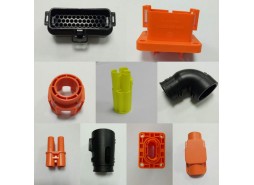

Plastic Injection Molding
Plastic Injection Molding for Custom Parts and Production Planning
E-Mold provides plastic injection molding and mold manufacturing for custom components, from development-stage projects to repeat production. The service brings together design evaluation, tooling, molding, and agreed finishing requirements so buyers can assess the manufacturing route before committing to production.
Injection molding forms plastic parts by injecting molten resin into a mold, holding pressure as the material solidifies, cooling the component, and ejecting it. Once the tooling and process are established, the method can support repeatable production. Project economics depend on tooling investment, material, geometry, cycle time, accepted yield, and order quantity.
- Custom plastic components for low-, medium-, and high-volume project requirements.
- Plastic injection mold development, modification, and related machining.
- Design evaluation focused on manufacturability, material selection, and production needs.
- Surface finishing and inspection requirements defined with the project scope.
E-Mold confirms the proposed manufacturing route after reviewing the part files, resin requirements, quantities, and acceptance criteria. Fixed tolerances, minimum orders, and delivery dates are not assumed before that review.
Plastic Injection Molding Capabilities and Project Specifications
Confirm the Manufacturing Envelope Before Quotation
A suitable molding proposal must match both the part and its production requirements. E-Mold's stated service scope includes plastic injection molding, precision molds, mold modification, machining, and surface finishing. The following specifications require project-level confirmation rather than a universal capability claim.
| Project Item | Scope or Assessment Requirement | Quotation Information |
|---|---|---|
| Part and mold development | Design evaluation, mold manufacturing, and modification within the agreed scope. | Current 3D model, available 2D drawing, revision, and intended application. |
| Material | Thermoplastic grade and processing feasibility require confirmation. | Resin designation, manufacturer preference, additives, color, and required documentation. |
| Part dimensions and weight | Maximum size and shot requirements depend on the proposed equipment and tool. | Overall dimensions, projected geometry, and estimated part weight if available. |
| Accuracy and tolerances | Achievable requirements depend on material, geometry, shrinkage, and measurement conditions. | Critical dimensions, datums, assembly interfaces, and acceptance limits. |
| Production quantity and MOQ | Low-, medium-, and high-volume requirements can be reviewed. The minimum practical order is project-specific. | Initial quantity, annual demand, variant quantities, and expected repeat orders. |
| Surface requirements | Molded appearance and secondary finishing require separate specification. | Visible surfaces, texture or finish reference, color, and permissible gate or ejector marks. |
| Inspection and documentation | Methods, sample coverage, and report availability must be agreed before production. | Critical characteristics, measurement method, report format, and traceability needs. |
| Lead time and delivery | Tooling, trials, approval, production, finishing, and shipping require separate planning. | Target milestones, sample approval needs, delivery destination, and packing requirements. |
Material Options Start with the Required Performance
Material discussions can include common thermoplastic families such as ABS, PP, PE, PC, PC/ABS, PA, POM, and PBT. These are examples for enquiry preparation, not a confirmed list of every resin E-Mold can process. E-Mold must confirm the exact grade against the tool, equipment, sourcing, and application requirements.
- Specify temperature, impact, stiffness, and chemical exposure requirements.
- Identify any glass reinforcement, flame-retardant formulation, or color requirement.
- State whether a nominated grade is mandatory or alternatives may be evaluated.
- Include applicable food-contact, medical, electrical, or other documentation requirements.
A general material name is not enough to establish compliance or final part performance. Drying, processing, shrinkage, and conditioning requirements must follow the selected grade rather than a single rule for all plastics.
Plastic Injection Mold Planning for Rapid and Repeat Production
Match the Tooling Investment to the Production Plan
A plastic injection mold should be planned around the required geometry, material, appearance, order frequency, and expected production demand. Cavity count, gating, cooling, venting, and moving features influence both the initial investment and the work required to produce acceptable parts.
- Initial and forecast quantities help determine whether additional cavities are justified.
- Undercuts and side features may require more complex tooling or a design revision.
- Gate and ejector locations should be reviewed against cosmetic and assembly surfaces.
- Tool maintenance, future changes, and repeat-order requirements should be discussed before manufacture.
A lower tooling price does not necessarily produce the lowest project cost. E-Mold's proposal should distinguish the tool scope, molding scope, finishing requirements, and any assumptions that affect repeat orders.
Use a Rapid Mold When the Project Conditions Support It
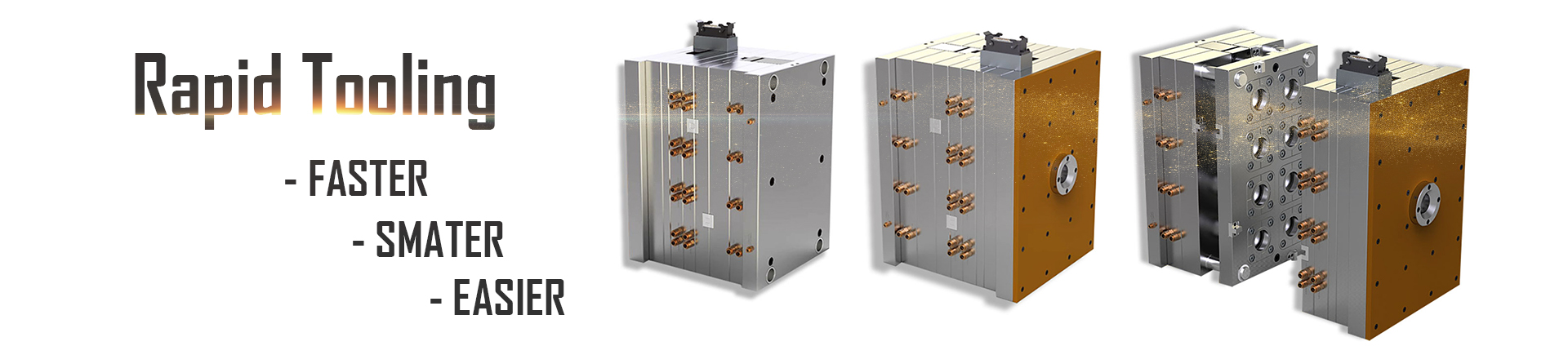
A rapid mold approach prioritizes a tooling route suited to an earlier manufacturing stage or a constrained development schedule. It is not a guarantee of a fixed turnaround, unlimited tool life, or production-equivalent output for every design.
- Confirm whether the objective is an assembly trial, pilot build, or repeat supply.
- Identify geometry and material requirements that cannot be simplified.
- Agree the expected production demand and any limitations of the proposed tool.
- Separate tool completion from sample approval and finished-part delivery.
E-Mold can assess rapid mold requirements through its mold manufacturing and modification services. The quoted tooling route and schedule need to reflect the actual design, not the word “rapid” alone.
Plastic Injection Molding Design Review and Custom Part Requirements
Resolve High-Impact Geometry Questions Before Tool Manufacture
E-Mold offers design evaluation and consultation for custom manufacturing projects. For injection-molded components, the review should prioritize features that affect filling, cooling, ejection, assembly, and appearance rather than applying a generic design checklist without considering the application.
- Wall thickness and transitions that may contribute to uneven cooling or sink marks.
- Ribs, bosses, holes, and fastening features that affect strength and material distribution.
- Draft, undercuts, and release access that influence tool construction and ejection.
- Parting lines, gates, and ejector locations near cosmetic or functional surfaces.
- Critical fits, sealing interfaces, and dimensions requiring a defined measurement method.
Design changes must preserve the product's function. E-Mold should identify proposed modifications for customer approval before the tool or part specification is changed.
Separate Routine Specifications from Additional Development
Color references, drawing revisions, visible surfaces, and standard packing preferences can be included in the enquiry. Special resins, tight feature relationships, inserts, complex moving tool features, secondary assembly, or regulated-use requirements need additional feasibility review.
- Define surface finish, texture, markings, and permissible cosmetic variation.
- Provide insert details or assembly drawings where multiple components interact.
- Specify any required samples, inspection records, or material documentation.
- Identify packaging restrictions that protect critical surfaces or prevent part deformation.
These items become confirmed service commitments only when they are included in the agreed quotation and manufacturing scope.
Plastic Injection Molding Quality Checks from Resin to Finished Parts
Connect Process Checks to the Customer's Acceptance Criteria
E-Mold describes its molding operation as covering incoming resin through finished-product release. The project quality plan should translate that route into checks appropriate to the part, including material identity, specified preparation, molding condition, finishing, and final acceptance.

- Confirm the specified resin grade, color, and required material records.
- Review samples against the approved drawing and cosmetic requirements.
- Agree how critical dimensions and assembly-related features will be assessed.
- Define production inspection coverage and any required reports.
- Preserve the agreed identity and protection through packing and shipment.
E-Mold must confirm available inspection methods and documents for each project. This page does not imply a particular metrology system, certification, complete dimensional report, or third-party testing package unless separately agreed.
Plastic Injection Molding Applications Across Product Development
Projects That Benefit from a Defined Tooling and Production Route
E-Mold's stated application sectors include automotive, electrical, medical, and consumer products. The relevant manufacturing question is how a specific component's requirements match the proposed material, tool, and production route.
- Product development teams preparing molded parts for assembly evaluation or pilot builds.
- Equipment manufacturers sourcing housings, covers, brackets, and other custom plastic components.
- OEM purchasing teams planning repeat supply with controlled drawings and acceptance criteria.
- Automotive and electrical projects requiring application-specific material and inspection review.
- Medical-device projects requiring clearly defined component use and supporting documentation.
Industry relevance does not establish approval for every end use. Safety-critical, medical, food-contact, and regulated applications require separate review of the component, material, documentation, and validation responsibilities.
Plastic Injection Molding Example for an Equipment Enclosure Project
Typical Project Example
The following hypothetical example illustrates how an equipment manufacturer could structure an injection molding enquiry for a two-piece control enclosure. It is not a completed E-Mold customer case or a claim of measured production results.
Buyer Requirement: The project calls for mating upper and lower housings with screw bosses, connector openings, and visible exterior surfaces. The buyer needs an initial assembly batch followed by potential repeat orders. Material performance, fit, acceptable surface marks, and the sample approval process must be defined before tooling.
Solution: E-Mold's proposed scope would begin with review of the CAD files, drawing requirements, resin choice, and quantity forecast. The manufacturing proposal would address wall transitions, boss geometry, mold separation, gate and ejector locations, tooling configuration, and agreed inspection of the enclosure interfaces. Any design changes would require buyer approval.
Result: The intended decision output is an agreed tooling and production scope, a sample evaluation plan, and clear acceptance criteria for subsequent supply. Actual feasibility, schedule, cost, and part performance would remain subject to quotation, tool trials, and customer evaluation.
Plastic Injection Molding Questions for Engineering and Procurement
Materials and Project Fit
Which materials can E-Mold assess for plastic injection molding?
An enquiry can specify common engineering or commodity thermoplastics, but E-Mold must confirm the exact grade, additives, sourcing, and processing requirements. Include the required operating conditions if material selection is not yet final.
Can E-Mold quote a project before the material is selected?
An initial review can use the application requirements, but a firm production quotation requires a defined material or clearly stated assumptions. Alternative grades should not be treated as equivalent without approval.
Tooling, Quantities, and Delivery
How is a plastic injection mold selected for the project?
The proposal should account for geometry, resin, expected demand, cavity count, appearance, maintenance, and any anticipated revisions. Tool specifications and ownership arrangements should be documented in the quotation.
When is a rapid mold approach appropriate?
It may be suitable for development or early production when the geometry, material, quantity, and tooling expectations support that route. It does not automatically replace a tool planned for sustained production.
What are the minimum order quantity and maximum part size?
Neither is published as a universal limit for this service. E-Mold needs the part files, material, and quantities to confirm the practical order size and equipment compatibility.
How long do tooling and molded-part delivery take?
E-Mold must confirm the schedule after reviewing tooling complexity, material availability, trial requirements, approval stages, production, and finishing. Tool completion and shipment readiness are separate milestones.
Accuracy, Samples, and Quality Documents
What tolerances can be achieved?
Feasibility depends on the resin, geometry, tool, shrinkage behavior, and measurement conditions. Identify critical dimensions on the drawing rather than applying an unsupported tight tolerance to every feature.
Can samples and inspection reports be included?
Include the required sample quantity, evaluation purpose, inspected characteristics, and report format in the enquiry. E-Mold must confirm the available scope and any associated cost or schedule.
About E-Mold Rapid Manufacturing and Its Injection Molding Support
E-Mold Rapid Manufacturing Ltd is based in Dongguan, Guangdong, China, and provides plastic injection molding alongside precision mold manufacturing, machining, and related manufacturing services. E-Mold's stated scope includes design evaluation, mold modification, and surface finishing, supporting projects from proof-of-concept development to production. For injection-molded components, the relevant tooling, material, inspection, and delivery requirements are defined at project level.
Request a Plastic Injection Molding Review with Your Project Details
For a plastic injection molding quotation and manufacturing review, provide the following information through the page's enquiry form or existing contact option:
- Current 3D model and available 2D drawing, including the drawing revision.
- Required resin grade, color, surface finish, and intended application.
- Initial quantity, expected repeat demand, and variant breakdown.
- Critical dimensions, tolerances, assembly interfaces, and cosmetic requirements.
- Existing mold information or new tooling requirements, including any rapid mold objective.
- Sample approval needs, inspection documents, target delivery milestones, and special packaging requirements.
If the design or material is not finalized, identify the open decisions and the purpose of the first parts. E-Mold can then clarify the information needed for a design evaluation, the assumptions behind the quotation, and the requirements that must be resolved before tooling or production.