




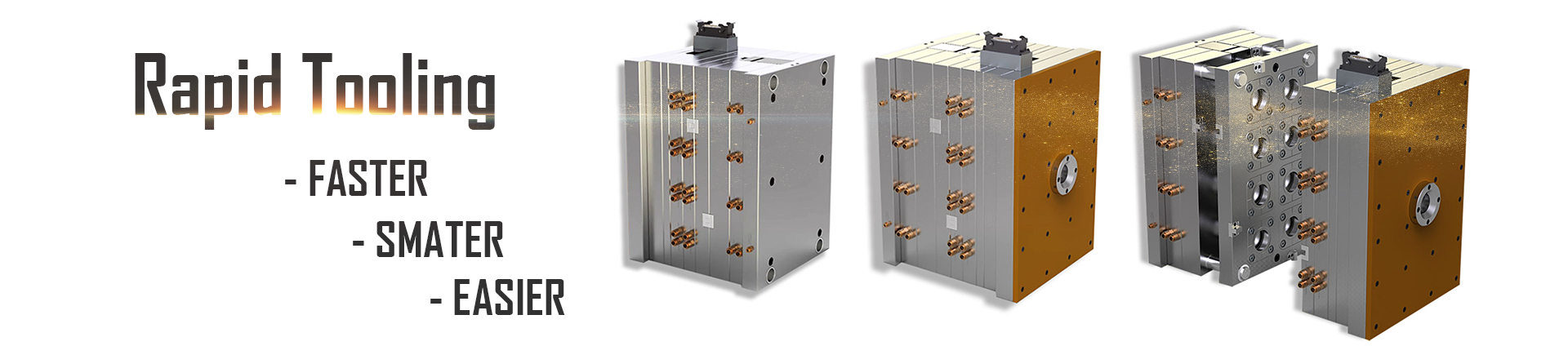
Rapid Tooling
Rapid Tooling for Custom Plastic Parts From Prototype to Low-Volume Production
E-MOLD provides rapid tooling for plastic injection molding projects that require functional parts before full production tooling is released. Rapid prototype tooling and prototype tooling can support design validation, engineering samples, pilot builds, and selected low-volume production requirements. Tool design, mold structure, and material selection are reviewed according to part geometry, resin, expected quantity, cosmetic requirements, and delivery needs.
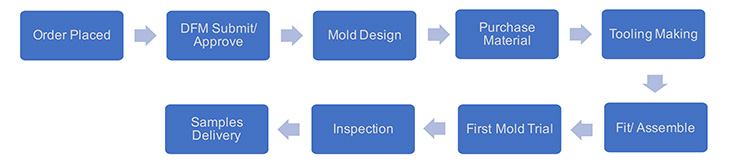
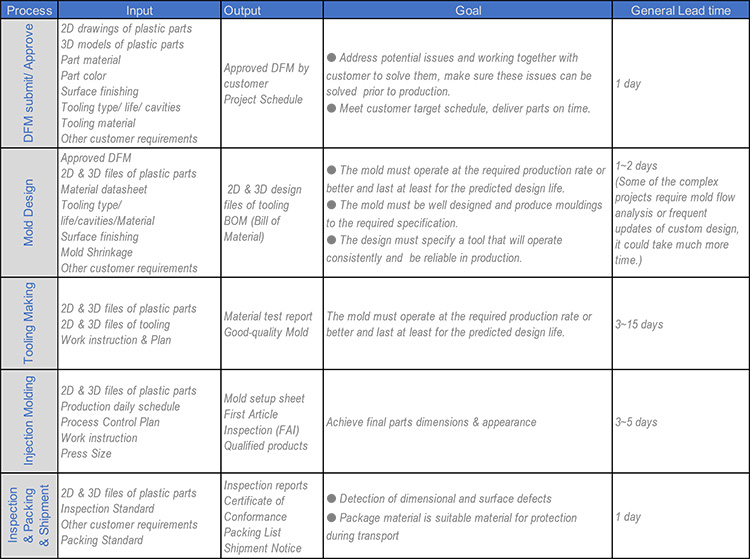
Rapid tooling is suitable when 3D-printed or machined prototypes are no longer enough to evaluate the intended plastic material, part fit, assembly performance, or molded surface condition. E-MOLD supports the process from DFM review through mold manufacture, molding trials, and part delivery.
Why Rapid Tooling Matters for Product Development Projects
Validate parts in the intended injection molding material
Rapid tooling enables product teams to test parts in the selected plastic resin before committing to a full production mold. Molding the part in its intended material can provide more useful information about fit, assembly, wall behavior, mechanical performance, and surface appearance than an early-stage substitute prototype.
- Evaluate form, fit, and function using the intended plastic material
- Review snap fits, mounting features, ribs, bosses, and assembly interfaces
- Assess molded surface appearance before full production tooling is released
- Support engineering samples, pilot builds, and customer evaluation parts
- Identify design revisions before larger tooling investment
Match tooling construction to the project stage
Prototype tooling does not need to follow the same construction route as long-term production tooling. The appropriate rapid mold solution depends on the maturity of the part design, planned molding quantity, resin type, tool-life expectation, cosmetic requirements, and likelihood of future design changes.
E-MOLD reviews these conditions before confirming the mold structure. This helps buyers select a tooling route that fits prototype validation, bridge production, or low-volume manufacturing without assuming that one mold type is suitable for every project.
Review moldability before tool manufacture begins
Changes made after mold machining begins can affect cost and schedule. E-MOLD performs a DFM review of the available project data to identify manufacturing considerations before rapid tooling is released for production.
- Draft angle, wall thickness, ribs, bosses, and undercut review
- Parting-line, gate location, ejection, and shut-off evaluation
- Insert, thread, assembly, and mating-feature review
- Cavity quantity and mold layout assessment
- Plastic resin, filler content, surface requirement, and molding-risk review
Rapid Tooling for Injection Molding and Low-Volume Parts
Rapid tooling for injection molding is used when a project requires molded parts before a full production mold is approved. It can support functional prototypes, engineering builds, pilot runs, bridge production, and controlled low-volume tooling requirements.
When rapid tooling is a suitable option
- The design needs validation in the intended injection molding resin
- Functional parts are required for fit, assembly, or performance testing
- The project needs a limited quantity before a production decision is made
- Product geometry may change after molded-part evaluation
- A bridge or low-volume tooling route is required before long-term production
- Customer samples or pilot-stage components are needed for project review
When production tooling should be reviewed
Production tooling may be more suitable when the part design is stable and the program requires sustained output, a higher cavity count, extended mold durability, or long-term production planning. The selection between rapid tooling and production tooling should be based on resin, part geometry, expected volume, quality requirements, and planned product lifecycle.
Rapid Tooling Manufacturing Scope
E-MOLD develops custom rapid molds for plastic injection molding projects. Final tooling specifications are confirmed after reviewing the part design, intended material, quantity requirement, mold features, and downstream quality expectations.
| Capability Area | Available Scope | Project Considerations |
|---|---|---|
| Tooling purpose | Rapid prototype tooling, prototype tooling, bridge tooling, low-volume tooling, and mold modification | Tooling route is evaluated according to the project stage, target quantity, and design maturity. |
| Mold configurations | MUD units, hand-loaded inserts, two-plate molds, three-plate molds, single-cavity molds, multi-cavity molds, and family molds | Mold layout depends on part geometry, resin, part size, expected output, and manufacturing requirements. |
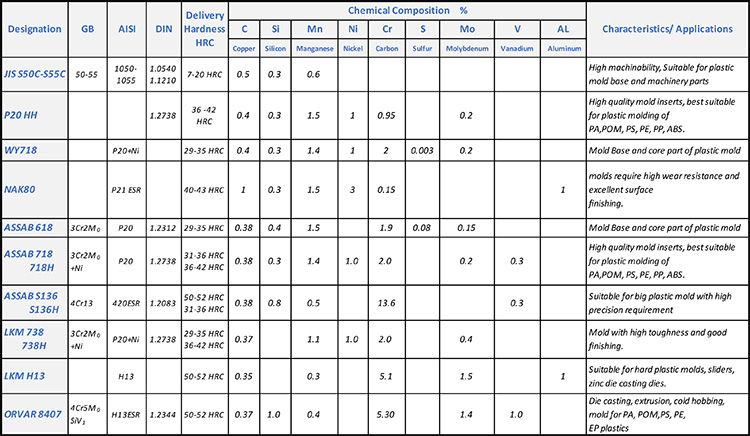
| Tooling materials | Cast steel, aluminum, P20, NAK80, S50C, S136, H13, 1.2344, and 1.2738 mold steels | Material selection is reviewed against resin type, filler content, surface condition, expected tool life, and production volume. |
| Mold features | Metal inserts, overmolding, hot runner systems, unscrewing mechanisms, and multi-cavity arrangements | Special mechanisms and complex actions require manufacturability review before quotation. |
| Part manufacturing | Plastic injection molding after tooling completion and trial evaluation | Material, color, surface finish, quantity, and inspection requirements should be defined with the project request. |
| Mold modification | Tooling changes based on reviewed customer specifications | Existing mold changes require available CAD data, mold information, requested modification details, and current-part information where applicable. |
Tool Steel and Mold Material Selection
Tooling material selection affects machining time, mold durability, surface finish potential, maintenance requirements, and suitability for the selected plastic resin. E-MOLD reviews the project conditions before recommending a mold material or construction method.
Pre-hardened steel and aluminum tooling options
Pre-hardened mold steels may be suitable for prototype and low-volume tooling when the part geometry, resin, surface requirements, and expected quantity support that route. Aluminum tooling may also be considered for selected rapid prototype tooling projects where design iteration and shorter mold manufacturing time are key factors.
- P20 can be reviewed for general plastic molding applications requiring practical machinability and controlled tool durability
- NAK80 can be considered when polishability and surface requirements are important
- S136 can be reviewed for applications where corrosion resistance or surface quality requires additional consideration
- Aluminum can be considered for selected prototype applications subject to geometry, resin, and volume review
Hardened steel for more demanding molding conditions
H13, 1.2344, 1.2738, and other tool steels can be evaluated when molding conditions require greater resistance to wear, heat, or repeated cycles. Abrasive resins, glass-filled materials, demanding surface requirements, tight shut-offs, and longer planned production runs may affect the recommended steel grade and mold design.
Final material selection should be based on the complete manufacturing requirement rather than a target quantity alone.
Engineering Support for Custom Rapid Tooling
E-MOLD supports custom mold design and mold modification for projects with non-standard geometry, insert requirements, special mold structures, or defined assembly conditions. The available manufacturing route is reviewed with the buyer’s drawings and project specifications before manufacture begins.
Custom mold design options
- Single-cavity, multi-cavity, and family mold layouts
- MUD units and hand-loaded insert configurations
- Metal insert overmolding and TPU, TPE, or TPV overmolding requirements
- Two-plate and three-plate mold structures
- Hot runner system requirements subject to engineering evaluation
- Unscrewing mold features subject to part geometry and production requirements
- Custom color, texture, marking, packaging, and inspection requirements subject to project review
Existing mold modification support
E-MOLD can assess modification requirements for customer-owned or supplied tooling. A complete review usually requires the available mold drawings or CAD data, material information where known, current molded-part condition, requested design change, and details of any molding, assembly, or dimensional issue.
Project communication from design review to delivery
E-MOLD manages project communication throughout the tooling and molding process. Project status, engineering questions, approved changes, sampling requirements, and delivery arrangements are reviewed with the available project documentation to support an organized manufacturing process.
Applications for Rapid Prototype Tooling
Rapid prototype tooling is appropriate for manufacturing teams that need injection molded parts for engineering review before committing to a long-term production program. It helps bridge the gap between early prototypes and full production tooling.
- Product development teams validating functional plastic components
- OEM manufacturers preparing pilot-stage assemblies
- Industrial equipment manufacturers requiring limited quantities of custom parts
- Automotive and electrical projects assessing material behavior and assembly fit
- Consumer product programs requiring molded samples before production release
- Buyers requiring a revised mold after an approved part design change
Rapid Tooling Frequently Asked Questions
What is rapid tooling?
Rapid tooling is a mold-making route used to produce injection molds or mold inserts for prototype, bridge, and selected low-volume manufacturing projects. The tool is designed according to the part geometry, selected resin, expected quantity, and required part performance.
What is the difference between rapid tooling and production tooling?
Rapid tooling is generally selected for prototype validation, engineering builds, bridge production, or low-volume parts where design flexibility and earlier access to molded parts are important. Production tooling is typically considered when the part design is stable and the project requires long-term output, higher cavity counts, or greater tool durability.
Can rapid tooling be used for plastic injection molding?
Yes. Rapid tooling for injection molding can be used to manufacture functional plastic parts for design validation, pilot production, engineering testing, and selected low-volume requirements. The suitable tool construction depends on the resin, part geometry, expected quantity, surface requirements, and project stage.
Which tool steels are available for rapid tooling?
E-MOLD can review cast steel, aluminum, P20, NAK80, S50C, S136, H13, 1.2344, 1.2738, and other suitable mold materials. The recommended option is determined after reviewing the selected resin, geometry, expected production volume, surface finish, and mold-life requirement.
Can E-MOLD make rapid molds with inserts or multiple cavities?
Yes. E-MOLD can review hand-loaded inserts, metal insert overmolding, MUD units, two-plate and three-plate molds, single-cavity molds, multi-cavity molds, and family molds. The final structure depends on part geometry, selected material, quantity requirement, and moldability review.
Can an existing injection mold be modified?
E-MOLD can assess rapid tooling modification requests based on customer specifications. Please provide available mold drawings or CAD files, current part information, requested changes, and any known molding, assembly, or dimensional issues for a practical review.
What information is needed for a rapid tooling quotation?
For a rapid tooling quotation, provide a 3D model, available 2D drawing, plastic material requirement, target quantity, critical tolerances, surface requirements, insert details, inspection needs, intended application, packaging requirements, and target delivery schedule.
About E-MOLD Rapid Manufacturing
E-MOLD Rapid Manufacturing Ltd operates manufacturing facilities in Dongguan, Guangdong, China, with a Hong Kong office supporting purchase orders and invoicing. E-MOLD provides low-volume manufacturing, OEM manufacturing, CNC machining, plastic injection molding, precision mold manufacturing, and sheet metal fabrication for product development and production projects.
For rapid tooling projects, E-MOLD combines DFM review, custom mold manufacturing, mold modification, injection molding, and project communication to help buyers assess a suitable route for their part design, material, and planned production stage.
Request a Rapid Tooling Manufacturing Review
For an accurate rapid tooling quotation and manufacturability review, please provide the project information available. Useful details include a 3D model, 2D drawing, selected plastic resin, target quantity, key dimensions and tolerances, cosmetic or surface requirements, insert requirements, intended application, inspection requirements, packaging needs, and target delivery schedule.
For an existing mold modification, include available mold drawings or CAD data, current molded-part samples or photos where applicable, the requested change, and information about any molding, dimensional, or assembly issue. This information helps E-MOLD evaluate the appropriate tooling route and identify items that require engineering confirmation before manufacture.
